

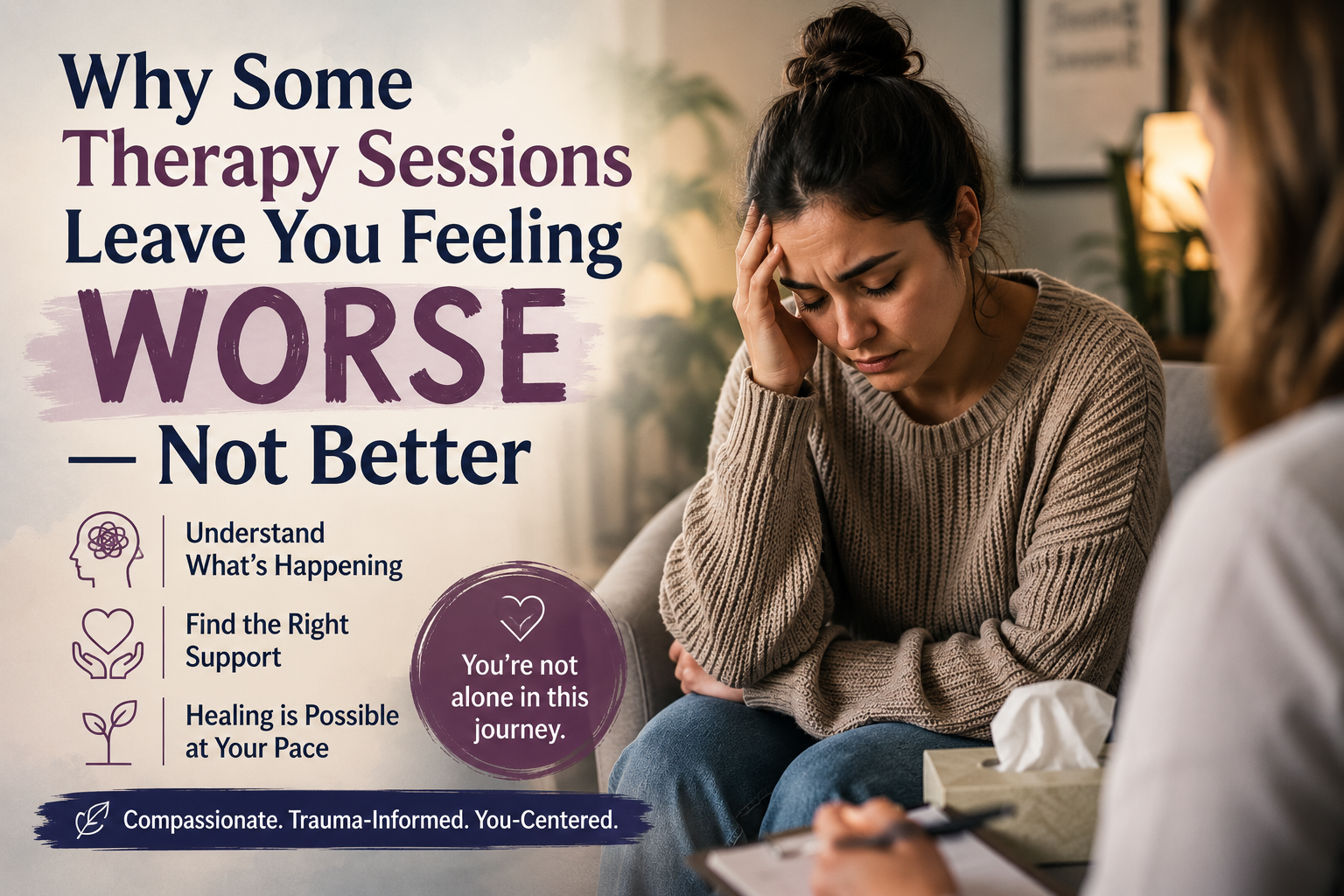
Starting therapy is often described as a brave and important step toward healing. Many people finally decide to seek help after months or even years of struggling silently with anxiety, trauma, stress, burnout, relationship issues, or emotional pain. They enter therapy hoping to feel understood, supported, and emotionally lighter.
But sometimes something unexpected happens.
Instead of feeling relieved after a session, you leave feeling emotionally drained, anxious, confused, numb, or even worse than before.
For many people, this creates even more fear and uncertainty. They begin questioning themselves, wondering if therapy is actually helping or if something is wrong with them.
The truth is, this experience is more common than most people realize.
And while therapy can absolutely be life-changing, not every therapy experience feels safe, supportive, or healing right away.
Understanding why some therapy sessions leave you feeling worse can help you make sense of your emotions and recognize what healthy, supportive therapy should actually feel like.
Feeling Worse After Therapy Doesn’t Always Mean Therapy Is Failing
One of the biggest misconceptions people have is that therapy should immediately make them feel calm, happy, or emotionally better after every session.
Real healing rarely works that way.
Therapy often brings up emotions, memories, fears, and experiences that have been buried or avoided for a long time. When difficult emotions finally surface, it can feel overwhelming at first.
You may leave a session thinking more deeply than usual. Old memories may replay in your mind. Your nervous system may feel emotionally exhausted.
This can happen because your mind and body are processing emotions that were previously pushed aside.
In some situations, feeling emotionally tired after therapy can actually be part of healthy emotional processing.
But there’s also another side to this conversation that many people avoid discussing.
Sometimes therapy leaves people feeling worse not because healing is happening — but because the therapeutic approach or environment doesn’t feel emotionally safe or supportive for them.
And that difference matters.
Not Every Therapist Is the Right Fit for Every Person
Therapy is deeply personal. The relationship between a therapist and client plays a huge role in whether someone feels emotionally supported or emotionally disconnected.
A therapist may be highly educated and experienced, but that doesn’t automatically mean they are the right fit for your needs, personality, communication style, or trauma history.
Many people stay in therapy even when they constantly leave sessions feeling judged, dismissed, emotionally unsafe, or misunderstood because they assume they are “supposed” to feel that way.
But therapy should not consistently leave you feeling emotionally invalidated.
A healthy therapeutic environment should feel supportive, respectful, collaborative, and emotionally aware — especially when trauma or anxiety is involved.
Sometimes the Nervous System Feels Overwhelmed
One of the biggest reasons people feel worse after therapy sessions is nervous system overload.
When someone has experienced trauma, chronic stress, emotional neglect, or anxiety, the body often learns to stay in survival mode. Therapy can begin unlocking emotions and memories that the nervous system has spent years trying to protect itself from.
If sessions move too quickly or emotions become too intense without enough grounding or emotional regulation support, the nervous system may respond with:
- Emotional shutdown
- Panic or anxiety
- Exhaustion
- Irritability
- Dissociation
- Sleep disruption
This doesn’t necessarily mean therapy is bad. It may mean the pace needs adjustment or the therapeutic approach needs to become more trauma-informed.
Healing is not just about talking. It’s also about helping the body feel safe during the process.
Why Trauma-Informed Therapy Matters More Than Ever
In 2026, more people are actively searching for trauma-informed therapists because awareness around trauma and nervous system health has grown significantly.
Trauma-informed therapy focuses on emotional safety, trust, pacing, and understanding how past experiences impact both the mind and body.
Without trauma awareness, therapy can sometimes unintentionally feel overwhelming or emotionally unsafe for certain individuals.
For example, pushing someone to discuss painful memories before they feel emotionally prepared can increase distress rather than healing.
A trauma-informed therapist understands that healing cannot happen when the nervous system constantly feels threatened or overwhelmed.
Instead of forcing vulnerability, they focus on creating emotional safety first.
This is one reason why trauma-informed therapy is becoming one of the most searched and discussed mental health topics today.
Some People Leave Therapy Feeling Judged Instead of Supported
Therapy should feel like a space where you can be honest without fear of shame.
Unfortunately, some individuals leave sessions feeling criticized, dismissed, or emotionally exposed in unhealthy ways.
This may happen when:
- A therapist minimizes emotional experiences
- Cultural or personal experiences are misunderstood
- Communication styles don’t align
- Emotional boundaries feel unclear
- Advice feels overly aggressive or invalidating
When this happens repeatedly, people often begin doubting themselves rather than feeling supported.
Over time, this can create emotional resistance toward therapy altogether.
That’s why finding the right therapist is not just important — it’s essential.
Healing Can Feel Uncomfortable — But It Should Still Feel Safe
There is an important difference between emotional discomfort and emotional harm.
Healing sometimes feels uncomfortable because growth often involves confronting painful emotions, unhealthy patterns, or unresolved experiences.
But even during difficult conversations, therapy should still feel emotionally safe and respectful.
You should feel:
- Heard
- Respected
- Supported
- Emotionally grounded
- Safe enough to express yourself honestly
A good therapist helps you process difficult emotions without making you feel emotionally abandoned or overwhelmed.
The Pressure to “Fix Yourself” Can Make Therapy Feel Worse
Many people enter therapy with intense pressure to heal quickly.
They expect themselves to immediately become more productive, emotionally stable, calm, or “better.”
But healing is rarely linear.
Some weeks feel lighter. Others feel heavier.
When people judge themselves harshly during therapy, every emotional setback can feel like failure.
This creates frustration and emotional exhaustion.
Part of healthy therapy involves learning how to stop treating healing like a performance.
The goal is not perfection. The goal is understanding, regulation, growth, and emotional safety over time.
Social Media Has Created Unrealistic Expectations About Therapy
One reason many people feel confused after therapy is because social media often presents healing in unrealistic ways.
Online, therapy is frequently described as instantly empowering, peaceful, or life-changing.
But real emotional work is much more complex.
Healing often includes:
- confusion
- grief
- emotional exhaustion
- vulnerability
- setbacks
- nervous system reactions
This doesn’t mean healing isn’t happening.
It means healing is human.
When people understand this, they stop panicking every time therapy feels emotionally difficult.
How to Know If Therapy Is Helping You
Therapy progress is not always dramatic or immediate.
Sometimes progress looks like:
- becoming more emotionally aware
- recognizing unhealthy patterns
- setting healthier boundaries
- understanding your triggers
- feeling safer expressing emotions
Even small shifts matter.
A healthy therapy process should gradually help you feel more connected to yourself — not more disconnected.
Over time, you should begin feeling:
- more understood
- more emotionally aware
- more empowered
- more emotionally safe
Even if difficult emotions still arise occasionally.
What You Deserve From Therapy
You deserve therapy that feels supportive, respectful, and emotionally safe.
You deserve a space where your experiences are not minimized or rushed.
You deserve care that understands trauma, emotional overwhelm, anxiety, and nervous system responses with compassion.
And most importantly, you deserve to know that struggling during therapy does not mean you are failing.
Healing is not about becoming perfect overnight.
It’s about slowly creating safety, understanding, and balance within yourself.
How Changes for Hope Supports Trauma-Informed Healing
At Changes for Hope, the focus is on creating a supportive and emotionally safe environment where individuals feel heard, respected, and understood throughout their healing journey.
Healing looks different for everyone. Some people need space to process trauma carefully. Others need support managing anxiety, emotional overwhelm, or long-standing emotional patterns.
That’s why trauma-informed care, emotional safety, and compassionate support remain central to the therapeutic process.
The goal is not to rush healing — but to help people move forward at a pace that feels safe and sustainable.
Final Thoughts
If you’ve ever left a therapy session feeling worse instead of better, it doesn’t automatically mean therapy is failing.
Sometimes difficult emotions are part of healing.
But it’s also important to recognize when emotional safety, trust, and therapeutic fit may need attention.
The right therapy experience should help you feel supported, respected, and gradually more connected to yourself over time.
And if your current experience doesn’t feel that way, it’s okay to ask questions, seek clarity, and explore the kind of support that truly meets your needs.
🚀 Looking for Trauma-Informed Support?
If you’re searching for compassionate, trauma-informed therapy that prioritizes emotional safety and healing, Changes for Hope is here to support you. Take the next step toward healing at your own pace.