

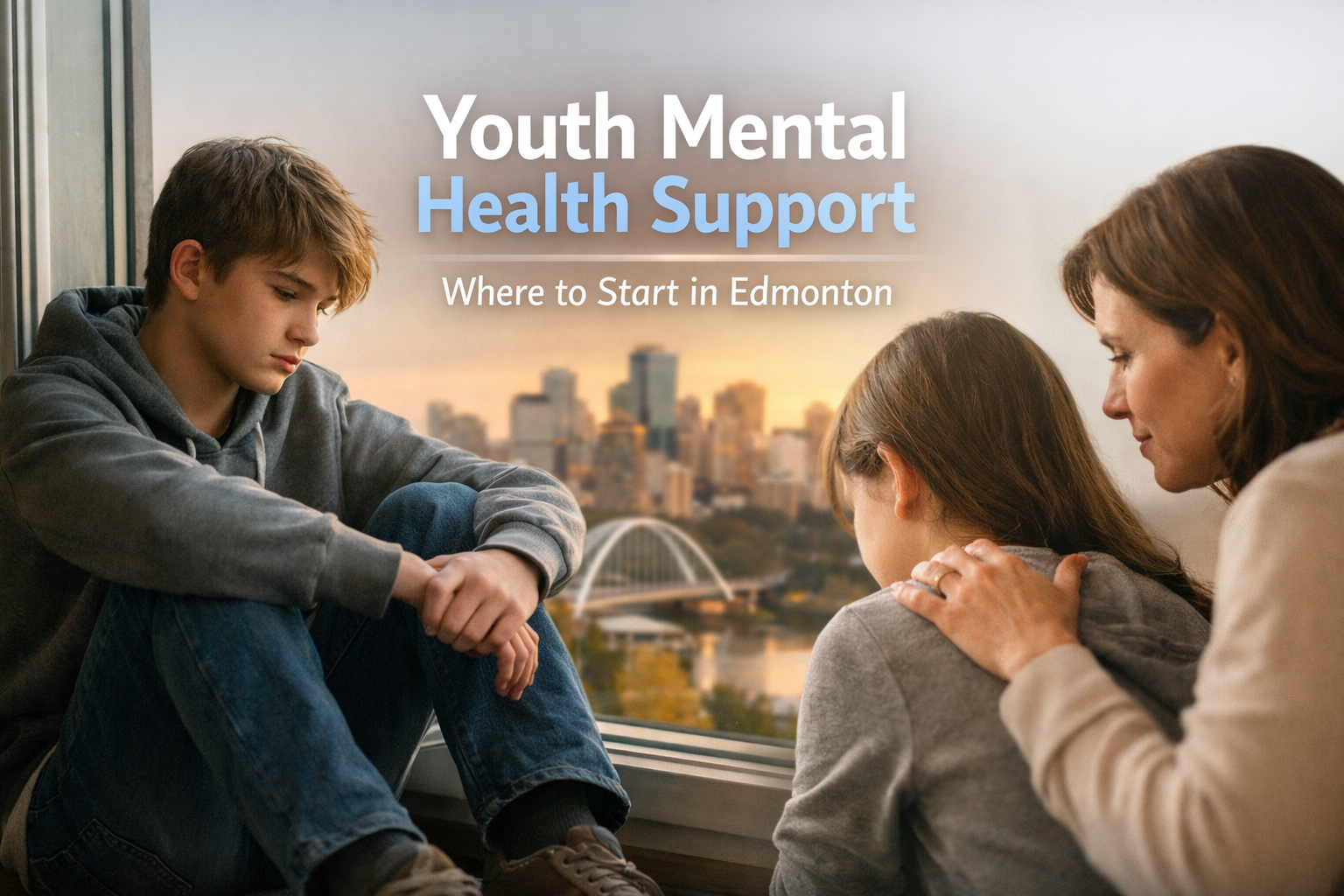
Introduction
Navigating youth mental health can feel overwhelming, especially when you are trying to determine what your teen is going through and what kind of help they actually need. In Edmonton, families have access to a wide range of support services, but the challenge is not the lack of options — it is knowing where to begin and which path is right for your specific situation.
Many parents delay taking action because they are unsure whether what they are seeing is “normal teenage behavior” or something that requires professional attention. The reality is that early support can make a significant difference in how a young person copes, heals, and grows into adulthood.
This guide is designed to give you clear, practical direction so you can confidently take the first step toward the right support for your teen in Edmonton.
⚠️ Signs Your Teen May Need Mental Health Support
Teenagers naturally go through emotional and behavioral changes, but there are certain patterns that go beyond normal development and may indicate a deeper concern. Recognizing these early warning signs allows families to intervene before challenges become more complex.
Common signs to watch for:
- Ongoing withdrawal from family, friends, or previously enjoyed activities
- Frequent anger, irritability, or emotional outbursts that feel disproportionate
- Persistent anxiety, fear, or signs of depression
- Sudden changes in sleep patterns or eating habits
- Declining academic performance or resistance to attending school
- Increased risk-taking behavior or disregard for personal safety
- Difficulty trusting others or maintaining relationships
- Signs of unresolved trauma, grief, or loss
If several of these signs are present and continue over time, it is important to explore structured support options rather than waiting for the situation to improve on its own.
🧩 Step 1: Understand What Your Teen Actually Needs
Before choosing a service, it is essential to understand the level and type of support your teen requires. Not all mental health challenges require the same level of care, and choosing the right starting point can save time, stress, and unnecessary setbacks.
In many cases, families benefit from taking a step back and assessing the full picture — not just behavior, but environment, history, and emotional triggers.
Key questions to consider:
- Is the behavior temporary, or has it been ongoing for weeks or months?
- Has your teen experienced trauma, loss, or major life changes?
- Is your home environment currently stable and supportive?
- Are there any immediate safety concerns?
- Has previous support (such as counseling) already been tried?
Understanding these factors helps determine whether your teen would benefit from light support, structured intervention, or a more comprehensive care environment.
🏥 Step 2: Youth Mental Health Support Options in Edmonton
Edmonton offers a range of youth mental health services designed to meet different levels of need. The key is not choosing the most popular option — it is choosing the right level of support for your teen’s situation.
1. Individual Therapy and Counseling
Individual therapy is often the first step for many families. It provides a private and supportive environment where youth can openly discuss their thoughts, emotions, and experiences with a trained professional.
This option is best for:
- Early signs of anxiety, stress, or depression
- School-related pressures or social challenges
- Youth who are still functioning relatively well at home
- Situations where emotional support is needed but structure is not
Benefits include:
- Personalized coping strategies
- Emotional regulation support
- A safe space to process thoughts without judgment
However, therapy alone may not be enough if challenges are rooted in trauma or if the home environment lacks stability.
2. Community-Based Youth Programs
Community programs provide structured support while allowing youth to remain in their home environment. These programs focus on building social skills, confidence, and positive peer relationships.
This option is best for:
- Youth needing moderate support and guidance
- Teens struggling with social interaction or behavior
- Situations where structure is helpful but full-time care is not required
Common benefits:
- Group interaction and peer support
- Mentorship and positive role models
- Structured daily or weekly activities
These programs can be a strong bridge between basic counseling and more intensive support services.
3. Trauma-Informed Group Care
For youth dealing with deeper emotional challenges, trauma, or instability, trauma-informed group care provides a higher level of structured support. This approach recognizes that behavior is often a response to past experiences and focuses on healing rather than punishment.
This option is best for:
- Youth with a history of trauma, loss, or instability
- Ongoing behavioral challenges that are not improving with therapy alone
- Situations where the home environment cannot provide consistent support
- Teens who need structure, supervision, and emotional safety
What this level of care provides:
- A safe and stable living environment
- 24/7 support from trained staff
- Individualized care plans tailored to each youth
- Emotional and behavioral guidance
- Consistent routines that promote stability
This level of care often creates the foundation needed for long-term healing and growth.
4. Semi-Independent Living (Ages 16+)
As teens approach adulthood, some require support that balances independence with guidance. Semi-independent living programs are designed to prepare youth for real-world responsibilities while still offering structured support.
This option is best for:
- Older teens transitioning into adulthood
- Youth who need guidance but not full-time supervision
- Individuals preparing for employment or further education
Focus areas include:
- Life skills such as budgeting, cooking, and time management
- Educational and career readiness
- Building independence while maintaining support
This approach helps youth develop confidence and practical skills needed for long-term success.
5. Crisis and Emergency Support
In situations where there is immediate risk to the teen or others, crisis support services are essential. These services are designed to respond quickly and provide immediate safety and intervention.
This option is necessary when:
- There is risk of self-harm or harm to others
- The situation has escalated beyond control
- Immediate intervention is required
In Edmonton, you can access:
- Emergency services (911)
- Crisis lines and urgent mental health support
- Hospital-based mental health services
These services are critical in urgent situations and should not be delayed.
📍 Step 3: How to Choose the Right Support in Edmonton
Choosing the right service is not about picking the most intensive option — it is about matching the support level to your teen’s actual needs.
A simple way to approach this:
- Start with therapy for mild to moderate concerns
- Move to community programs if structure is needed
- Consider group care if challenges are ongoing or severe
- Explore semi-independent living for older teens preparing for adulthood
The goal is to create a pathway that supports both immediate needs and long-term development.
💡 What Most Families Get Wrong
Many families wait too long before seeking help, hoping that behavior will improve on its own. Others choose support that is either too minimal or not structured enough for the situation.
Common mistakes include:
- Ignoring early warning signs
- Delaying professional support
- Relying only on discipline rather than understanding underlying issues
- Choosing services without proper assessment
Taking action early can significantly improve outcomes and reduce long-term challenges.
📞 Taking the First Step
If you are unsure where to begin, the best step is to start with a professional assessment or consultation. From there, you can determine the most appropriate level of care based on your teen’s specific needs.
When reaching out, be prepared to discuss:
- Behavioral changes you have observed
- Any history of trauma or major life events
- Previous support or interventions
- Current challenges at home or school
This information helps professionals guide you toward the right solution more effectively.
❓ Frequently Asked Questions
What is the best mental health support option for teens in Edmonton?
The best option depends on the severity of the situation. Therapy is suitable for mild concerns, while trauma-informed group care or structured programs are better for more complex challenges.
How do I know if my teen needs more than therapy?
If your teen’s behavior is not improving, or if there are deeper emotional or environmental challenges, more structured support may be necessary.
Are there programs in Edmonton for teens with trauma?
Yes, Edmonton offers trauma-informed care programs designed to support youth dealing with emotional and behavioral challenges related to past experiences.
When should I seek urgent help?
If there is any risk of harm or immediate danger, you should contact emergency services or a crisis support line right away.
🔚 Final Thoughts
Finding the right youth mental health support in Edmonton does not have to be overwhelming. By understanding your teen’s needs and exploring the right level of care, you can take a confident first step toward meaningful support and long-term stability.
The most important thing is not to wait. Early action creates better outcomes — for both your teen and your family.