

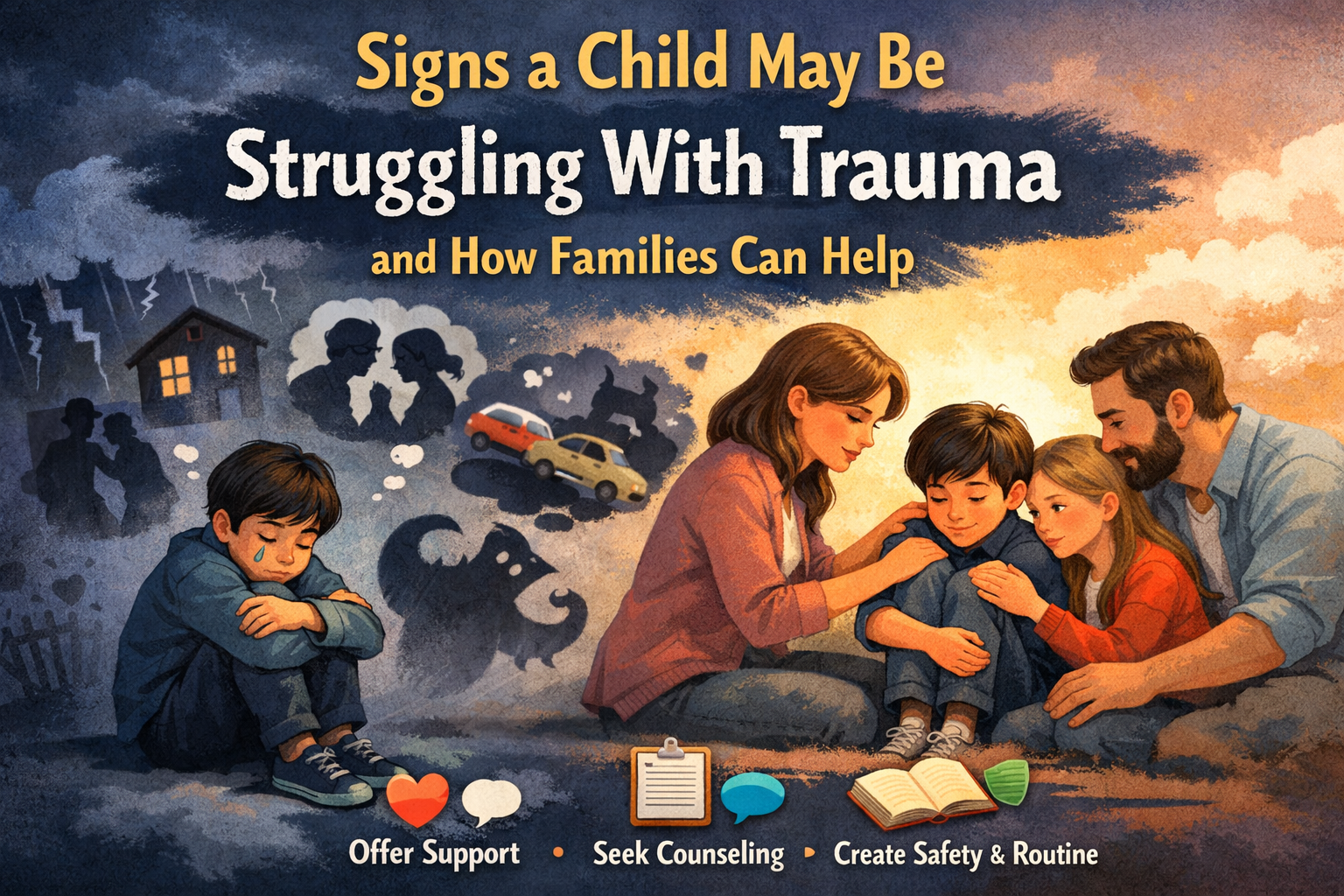
Children do not always express trauma in ways adults expect. Many children who are emotionally overwhelmed may continue going to school, interacting normally at times, or saying very little about what they are feeling, while internally struggling with fear, confusion, sadness, or emotional distress they do not yet know how to explain. This is why trauma often becomes visible first through behavior changes, emotional reactions, sleep patterns, withdrawal, or difficulty coping with ordinary situations. For families, understanding early signs matters because trauma that remains unnoticed for long eriods can begin affecting confidence, relationships, school engagement, and long-term emotional development. The earlier families recognize unusual changes and respond with patience and support, the easier it often becomes for a child to feel safe enough to begin healing.
Why Trauma in Children Often Looks Different Than Adults Expect
When adults think about trauma, they often imagine obvious distress or emotional breakdowns. In children, the signs are often quieter, inconsistent, or misunderstood.
A child may seem fine one day and unusually withdrawn the next. Some children become more emotional, while others become unusually quiet.
Trauma can result from many experiences, including:
- loss of a loved one
- family separation
- neglect
- abuse
- witnessing conflict
- sudden environmental change
- unstable caregiving
- community violence
- ongoing fear or insecurity
Not every child reacts the same way, which is why parents often miss early signals.
Emotional Signs a Child May Be Struggling With Trauma
Emotional changes are often one of the earliest indicators that something deeper may be affecting a child.
Parents may notice:
Increased Fear or Anxiety
A child may suddenly worry more than usual, become fearful in ordinary situations, or ask repeated questions seeking reassurance.
Sudden Mood Changes
Some children shift quickly between calm and frustration, sadness, or anger without obvious reason.
Emotional Shutdown
A child may stop expressing feelings openly and begin appearing emotionally distant.
Persistent Sadness
Ongoing sadness that does not improve over time may suggest emotional distress that needs attention.
These changes may appear subtle at first but often become clearer when observed over several weeks.
Behavioral Signs Families Often Notice First
Trauma frequently shows itself through behavior before children understand how to explain their feelings.
Common signs include:
- irritability
- anger outbursts
- sudden withdrawal
- avoidance of activities they previously enjoyed
- changes in appetite
- refusal to attend school
- difficulty following routines
In some cases, behavior that looks like defiance may actually be a child struggling internally.
This is why reacting only to the behavior without understanding the cause often makes support harder.
Changes in Sleep and Physical Habits
Trauma often affects the body as much as emotions.
Parents may notice:
Difficulty Falling Asleep
Children may stay awake longer, resist bedtime, or appear fearful at night.
Nightmares
Bad dreams often increase when children are processing stress internally.
Frequent Fatigue
Poor sleep often leads to low daytime energy.
Physical Complaints
Headaches, stomach discomfort, or unexplained body aches can sometimes reflect emotional stress.
These symptoms are common when emotional experiences remain unresolved.
School-Related Signs That Should Not Be Ignored
School is often where trauma begins showing more clearly.
A child may begin experiencing:
- difficulty concentrating
- sudden drop in performance
- frustration with simple tasks
- social withdrawal
- reluctance to participate
Teachers often notice changes in attention before families do.
This does not always mean a child is academically struggling—it may reflect emotional overload.
Social Signs of Trauma in Children
Children experiencing trauma may begin interacting differently with others.
Some become withdrawn.
Others become unusually reactive.
Signs may include:
- avoiding friends
- difficulty trusting others
- fear of separation
- discomfort in group settings
- sudden sensitivity to conflict
Relationships often feel harder for children when emotional safety has been disrupted.
Why Some Children Become Angry Instead of Sad
One of the most misunderstood trauma responses is anger.
Many children express pain through frustration because anger feels easier than vulnerability.
Parents may see:
- shouting
- irritability
- aggressive reactions
- quick frustration
This often does not mean the child is simply being difficult.
It may mean emotions are overwhelming and not yet understood.
How Families Can Respond Supportively
A supportive response often matters more than having perfect words.
Helpful approaches include:
Stay Calm During Emotional Moments
Children often borrow emotional safety from adults around them.
Listen Without Immediate Correction
Allow children to speak without rushing to explain or fix.
Avoid Forcing Conversations
Some children need time before speaking openly.
Keep Daily Routines Stable
Predictability helps children feel secure.
Consistency often helps more than long conversations early on.
Why Safe Communication Matters
Children often talk indirectly before sharing difficult feelings directly.
They may mention small worries, ask unusual questions, or talk more during calm activities.
Good communication often means:
- being available
- listening carefully
- avoiding judgment
- responding gently
The goal is to create emotional safety rather than immediate answers.
When Professional Support May Be Important
Some signs suggest outside support may help.
This includes when:
- symptoms continue for weeks
- school difficulties increase
- sleep problems worsen
- fear becomes frequent
- family routines are heavily affected
Professional support helps children process emotions in structured ways they may not yet manage alone.
Healing Takes Time, Not Pressure
Children do not heal on a fixed timeline.
Some improve quickly once safety is restored.
Others need longer periods of trust and consistency.
What matters most is helping the child feel:
- heard
- safe
- understood
- supported
Healing often happens gradually through repeated positive experiences.
Helping Children Regain Emotional Stability
At Changes for Hope, youth and family support focuses on creating emotionally safe environments where children can begin processing difficult experiences through structured care, guidance, and compassionate support.
For many families, understanding trauma early creates the opportunity to respond with patience before emotional struggles become harder to manage.